Fashion has always reflected its time. Its silhouettes have responded to politics, its materials to technology, and its aesthetics to the shifting ideals of society. Yet the most fascinating chapters of fashion history belong to those who refused to accept the boundaries of their own era.
They did not simply introduce new ways of dressing. They challenged the very definition of clothing.
Elsa Schiaparelli invited surrealism into the wardrobe. Yves Saint Laurent translated modern painting into wearable geometry. Gianni Versace transformed extravagance into a celebration of identity. Thierry Mugler reconstructed the human silhouette into something almost supernatural. Rei Kawakubo questioned the conventions of beauty, while Alexander McQueen transformed the runway into a stage for emotion, technology, and artistic confrontation.
Their visions were radically different, sometimes even contradictory. What united them was not a particular aesthetic, but the courage to imagine something that did not yet exist.
Together, their work reveals a fundamental truth: fashion becomes culturally significant when it stops merely reflecting the world and begins questioning it.
I. The Courage to Imagine
Elsa Schiaparelli and the Birth of Surrealist Fashion
In the Paris of the 1930s, fashion and art occupied increasingly interconnected worlds. Among the designers who embraced this exchange, Elsa Schiaparelli was one of the most daring.
Born in Rome in 1890, Schiaparelli approached fashion with an imagination that challenged the conventions of traditional couture. Her work developed in conversation with the Surrealist movement, particularly through collaborations with artists such as Salvador Dalí and Jean Cocteau.
For Schiaparelli, a garment could be a joke, an illusion, a contradiction, or a philosophical question.
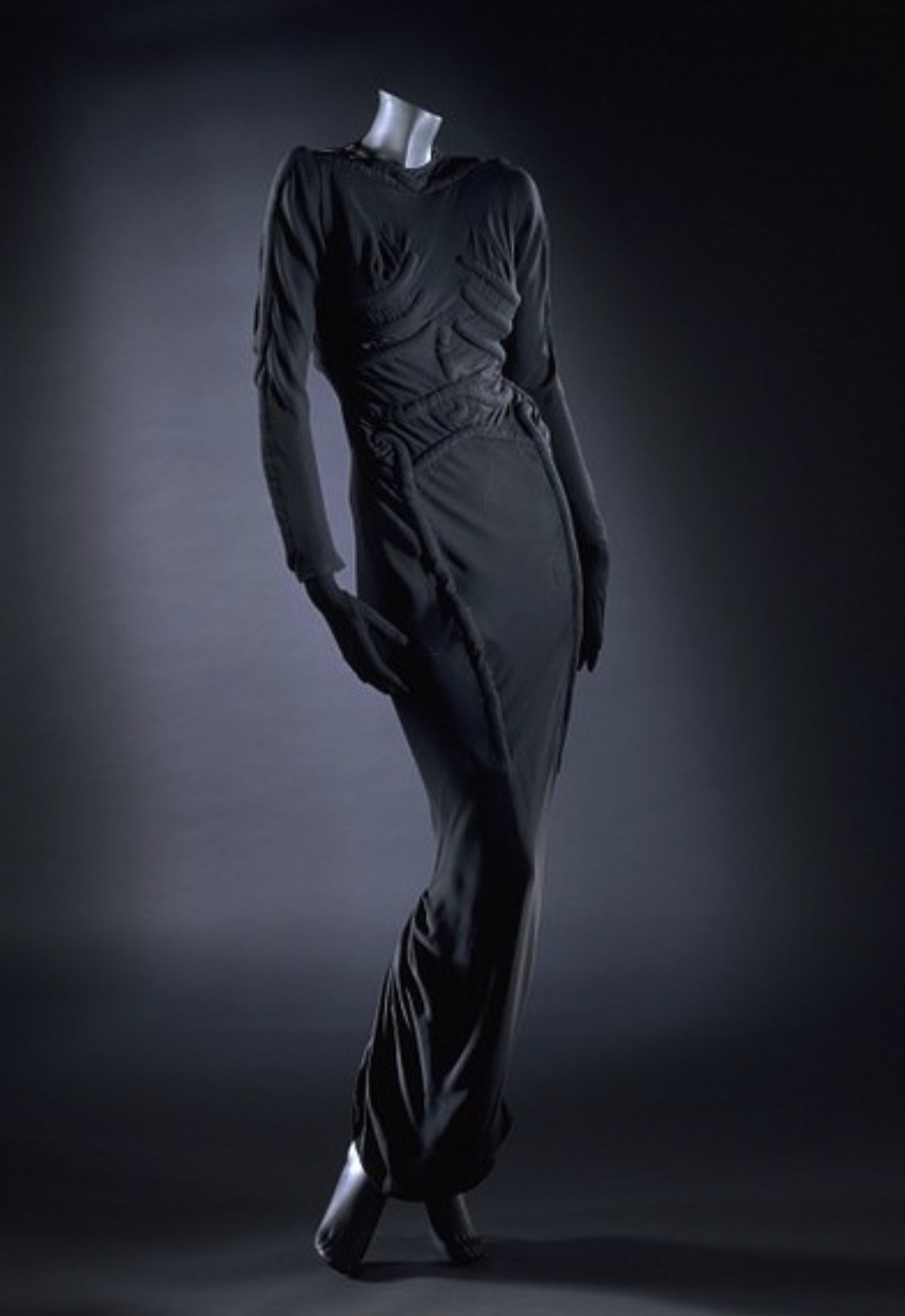
Her Skeleton Dress of 1938, developed with Dalí, remains one of the most remarkable examples of this philosophy.
Created in black fabric, the evening gown features raised, padded forms tracing the anatomy of the human skeleton. Through a technique known as trapunto quilting, the structure beneath the skin appears to emerge from the garment itself.
The effect is simultaneously elegant and unsettling.
Rather than concealing the body, the dress reveals an imagined version of what lies beneath it. Fashion becomes a meditation on anatomy, mortality, and the relationship between the visible and invisible.
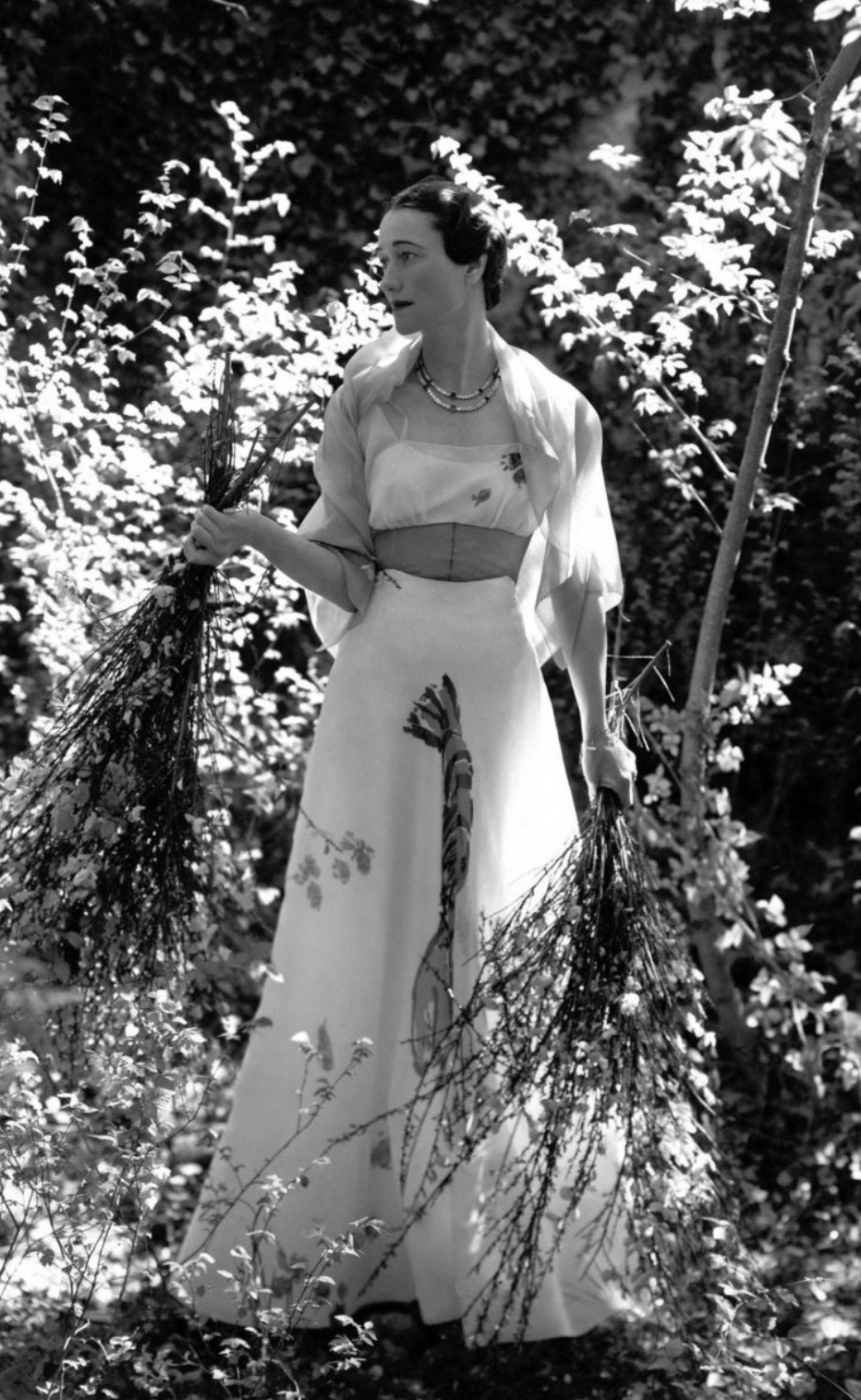
A year earlier, Schiaparelli and Dalí had produced another extraordinary creation: the Lobster Dress of 1937.
The ivory silk organza gown, printed with an oversized lobster motif designed by Dalí, transformed an unexpected and symbolically provocative image into the centerpiece of an elegant evening dress.
Famously worn by Wallis Simpson in photographs by Cecil Beaton, the garment challenged the expectation that elegance required restraint or predictability.
These creations were not simply eccentric exercises. They demonstrated that fashion could participate in the intellectual and artistic conversations of its time.
Schiaparelli did not treat clothing as a separate discipline from painting or sculpture. She treated it as another medium through which imagination could take physical form.
Her legacy remains especially relevant in an era when the boundaries between fashion, art, and technology are becoming increasingly fluid.
II. When Art Became Something to Wear
Yves Saint Laurent and the Language of Modernism
If Schiaparelli brought surrealism into fashion through provocation, Yves Saint Laurent approached the relationship between art and clothing through composition.
In 1965, the French designer introduced a series of dresses inspired by the abstract paintings of Dutch artist Piet Mondrian.
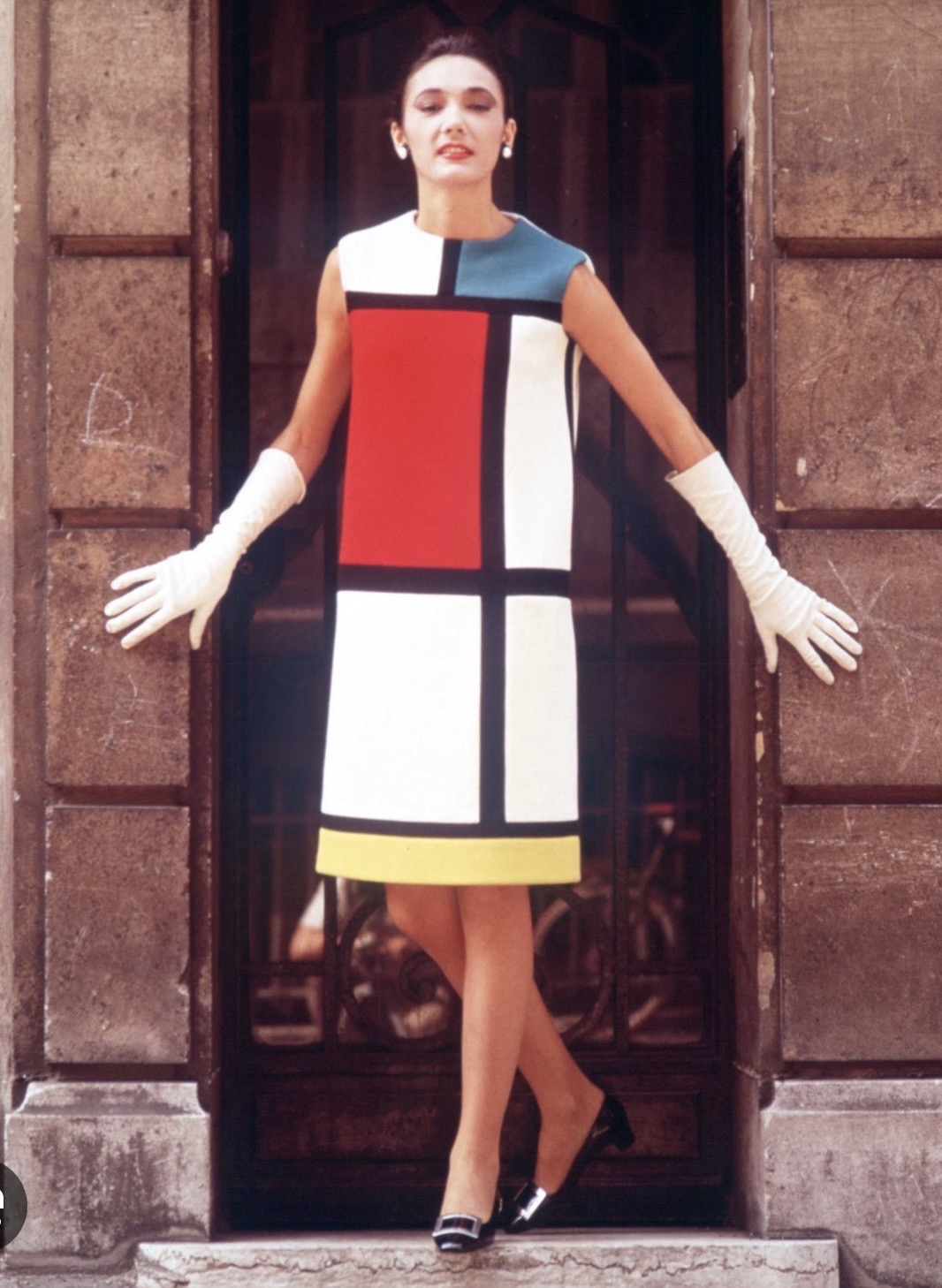
The most recognizable examples feature bold black lines dividing areas of white, red, blue, and yellow into carefully balanced geometric compositions.
At first glance, the dresses appear almost deceptively simple.
Yet their construction required considerable precision. Rather than merely printing a painting onto fabric, Saint Laurent translated its visual structure into the architecture of a garment, using carefully assembled sections of material to preserve the clarity of the composition.
The Mondrian Dress became an enduring symbol of the dialogue between fine art and fashion.
What made the creation revolutionary was not simply its reference to a famous painter. It was the recognition that the principles of modern painting, proportion, rhythm, balance, and abstraction, could exist beyond the canvas.
The human body became a moving composition.
Saint Laurent's broader career would continue to explore the intersection of fashion with art, literature, and cultural history.
His work demonstrated that inspiration did not have to remain literal. An artistic idea could be translated into an entirely different discipline while preserving its intellectual essence.
In this exchange, fashion becomes more than a decorative object. It becomes a form of cultural interpretation.
III. More Is a Language
Gianni Versace and the Power of Extravagance
By the late twentieth century, fashion had become increasingly intertwined with celebrity, music, media, and popular culture.
Few designers understood this transformation as instinctively as Gianni Versace.
Born in Reggio Calabria in 1946, Versace developed a visual universe that celebrated sensuality, confidence, classical mythology, and unapologetic extravagance.
Where minimalism sought refinement through reduction, Versace often found beauty in abundance.
His collections embraced vivid colors, elaborate prints, metallic details, provocative cuts, and references ranging from ancient Greece to contemporary popular culture.
For Versace, excess was not necessarily the opposite of sophistication. It could be a language of its own.
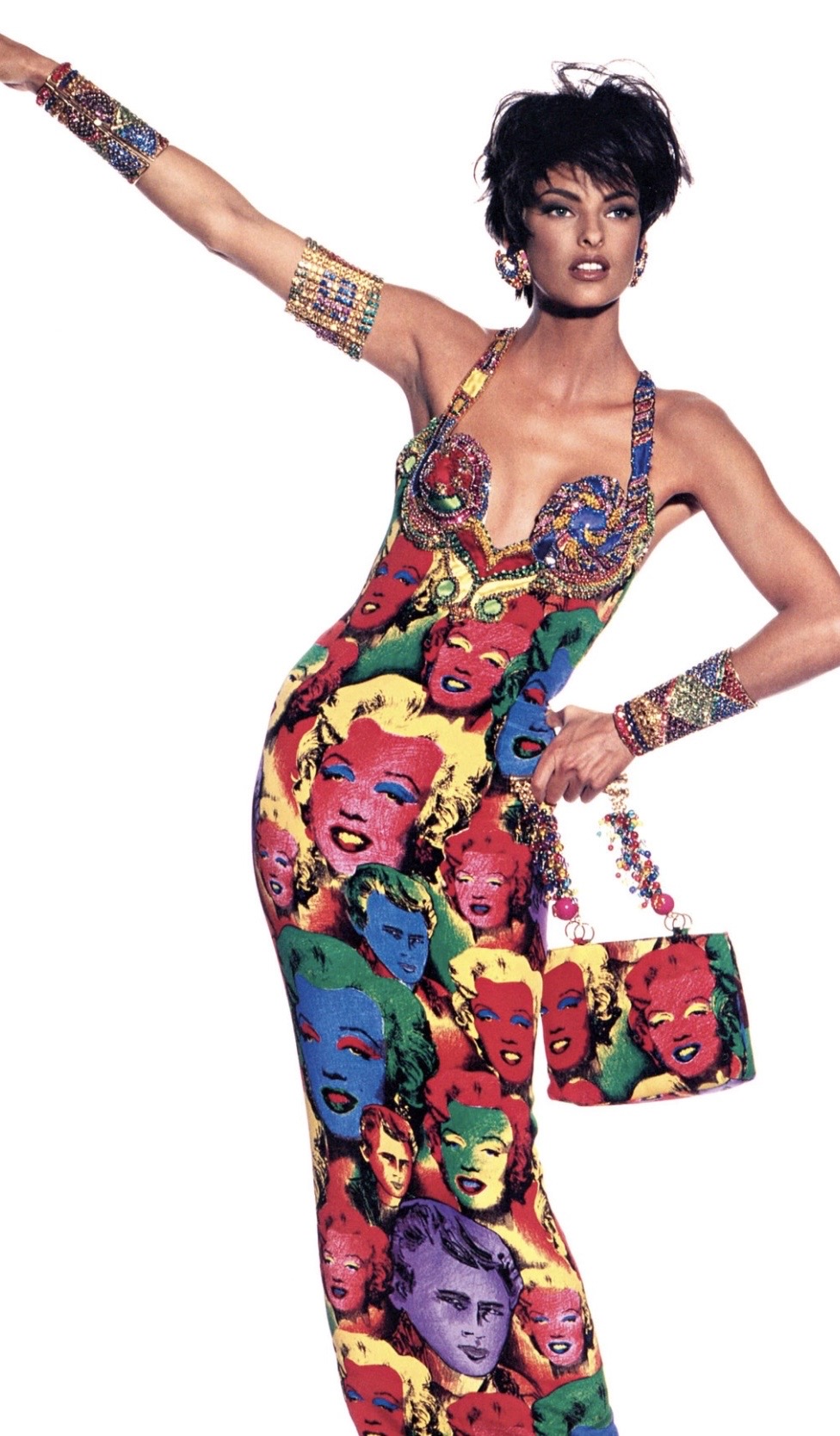
His Spring/Summer 1991 collection, featuring imagery associated with Andy Warhol's portraits of Marilyn Monroe and James Dean, remains an extraordinary example.
The repeated, brightly colored faces transformed the garments into moving canvases of Pop Art.
The collection reflected a cultural moment in which the distinctions between high art, mass media, celebrity, and luxury fashion were becoming increasingly porous.
Versace recognized that fashion could participate in this visual conversation without surrendering its identity.
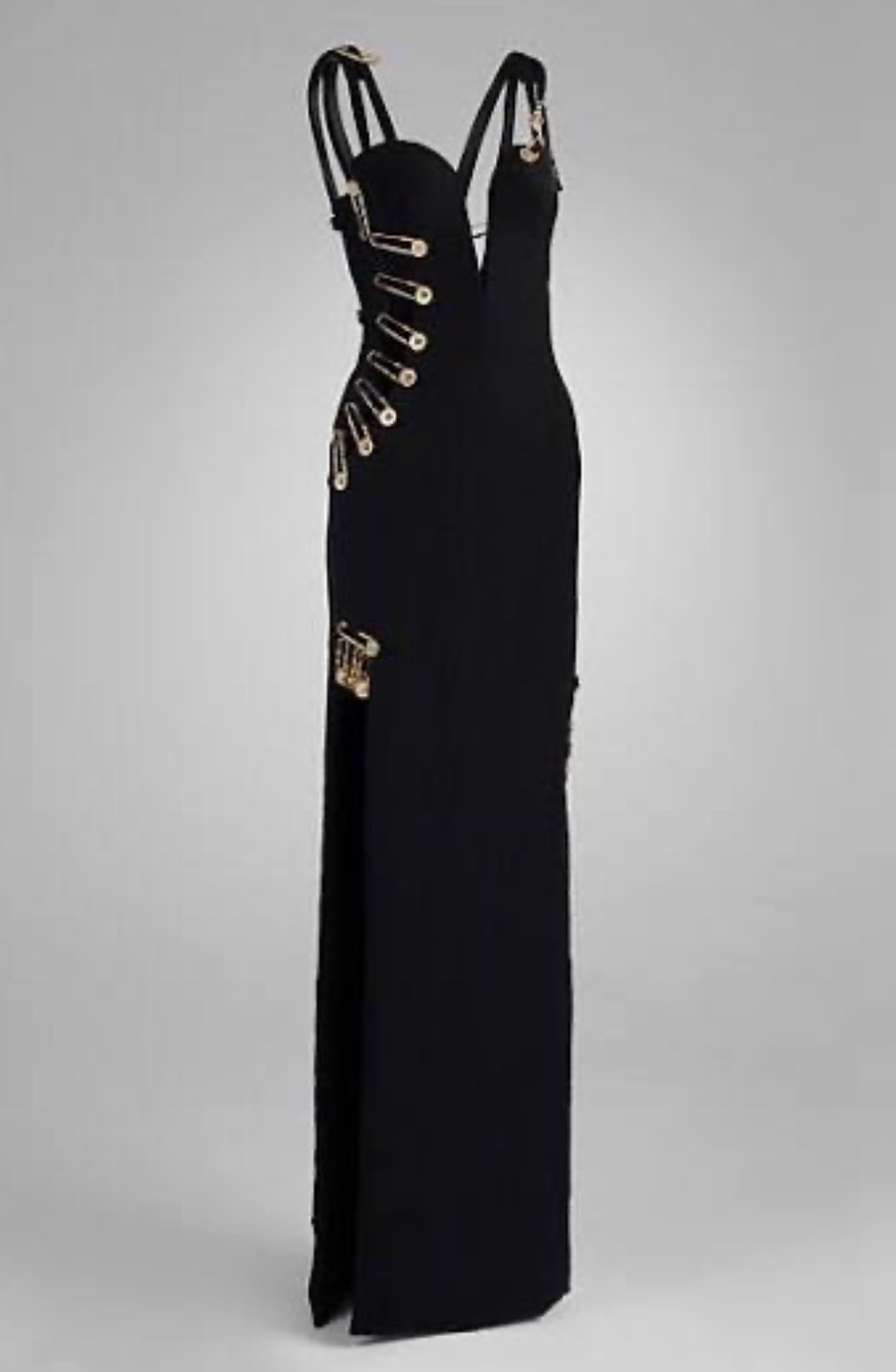
Three years later, his 1994 black safety-pin dress became another defining moment.
Held together by oversized gold safety pins, the garment combined the visual language of punk with the glamour of luxury eveningwear.
Its revealing construction appeared daring and spontaneous, yet depended upon precise tailoring and a sophisticated understanding of the body.
Worn by Elizabeth Hurley at the London premiere of Four Weddings and a Funeral, the dress became an international cultural phenomenon.
Versace demonstrated that fashion could embrace contradiction: rebellious yet luxurious, provocative yet controlled, theatrical yet meticulously constructed.
His work helped establish a modern understanding of fashion as a complete cultural spectacle, one in which the garment, the personality wearing it, and the image circulating around it become inseparable.
IV. The Body as Architecture
Thierry Mugler and Rei Kawakubo: Two Visions of Transformation
Fashion has traditionally worked with the proportions of the human body, emphasizing or concealing particular features according to the ideals of each era.
But what happens when designers stop accepting those proportions as fixed?
Thierry Mugler and Rei Kawakubo approached this question from radically different directions.
Thierry Mugler: The Body Reinvented
Throughout the 1980s and 1990s, Thierry Mugler developed a fashion universe characterized by exaggerated shoulders, dramatically sculpted waists, futuristic materials, and theatrical silhouettes.
His work often transformed models into figures that appeared somewhere between humans, machines, insects, and mythological beings.
One of his most extraordinary creations emerged during his Fall/Winter 1995 haute couture presentation: a gleaming metallic robot suit.
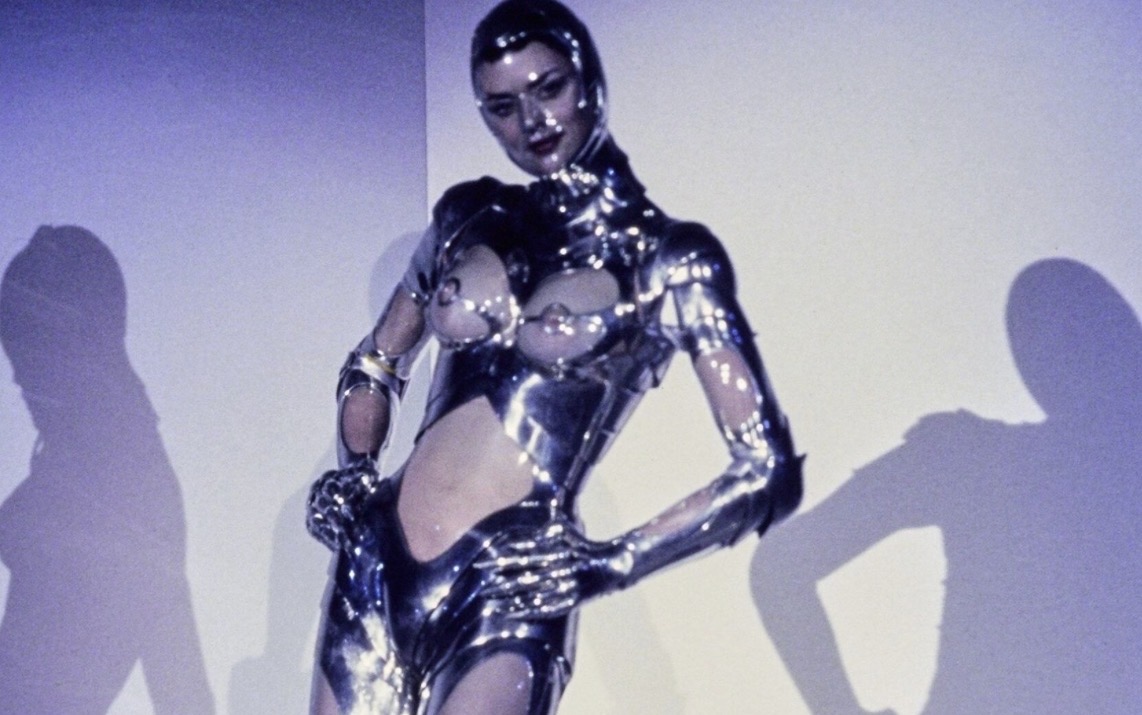
Constructed as an articulated, body-enclosing ensemble, the design reimagined the female figure through a futuristic vocabulary of armor, machinery, and sensuality.
The body was no longer simply dressed. It was reconstructed.
Mugler's approach reflected a fascination with transformation and the possibilities of fashion as three-dimensional design.
His garments often seemed closer to architectural structures or cinematic costumes than conventional clothing.
Yet their impact came from the tension between fantasy and the human form beneath.
Rei Kawakubo: The Beauty of the Unexpected
If Mugler exaggerated recognizable ideals of the body, Rei Kawakubo questioned why those ideals should exist at all.
For the Comme des Garçons Spring/Summer 1997 collection, titled Body Meets Dress, Dress Meets Body, Kawakubo introduced garments featuring unusual padded volumes that distorted the traditional silhouette.
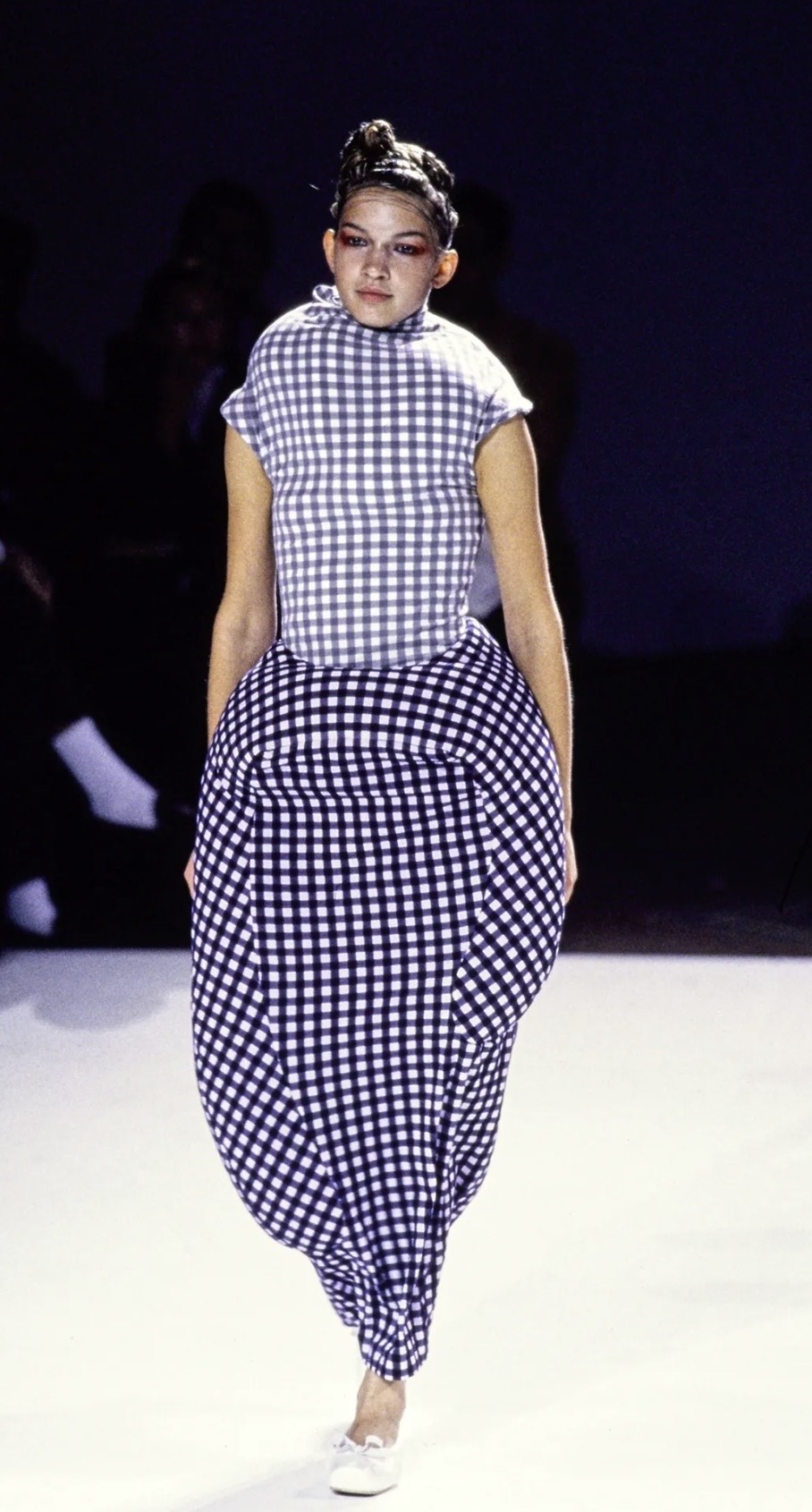
The collection, sometimes referred to as Lumps and Bumps, placed unexpected shapes around the hips, back, shoulders, and torso.
These forms challenged the familiar relationship between clothing and anatomy.
Rather than flattering the body according to established conventions, the garments proposed an entirely different understanding of proportion.
Kawakubo's work raised a provocative question: why must fashion always attempt to make the body appear conventionally beautiful?
In her vision, irregularity could become an aesthetic principle. Discomfort could provoke thought. A silhouette could be valuable precisely because it resisted easy interpretation.
Mugler and Kawakubo represent two distinct forms of creative rebellion.
One constructed extraordinary fantasies around the human figure. The other dismantled the assumptions through which that figure was traditionally understood.
Both expanded the possibilities of fashion through an architectural reconsideration of the body.
V. When the Runway Became Art
Alexander McQueen and the Theatre of Creation
Fashion shows were once primarily presentations of garments to buyers, journalists, and clients.
Alexander McQueen helped transform them into emotionally charged artistic experiences.
Born in London in 1969, McQueen combined exceptional technical knowledge of tailoring with a fascination for history, nature, mortality, technology, and the darker dimensions of human experience.
His collections frequently unfolded as narratives rather than conventional sequences of looks.
The runway became a stage upon which fashion could communicate ideas through movement, sound, performance, and spectacle.
One of the most unforgettable examples occurred during his Spring/Summer 1999 presentation, No. 13.
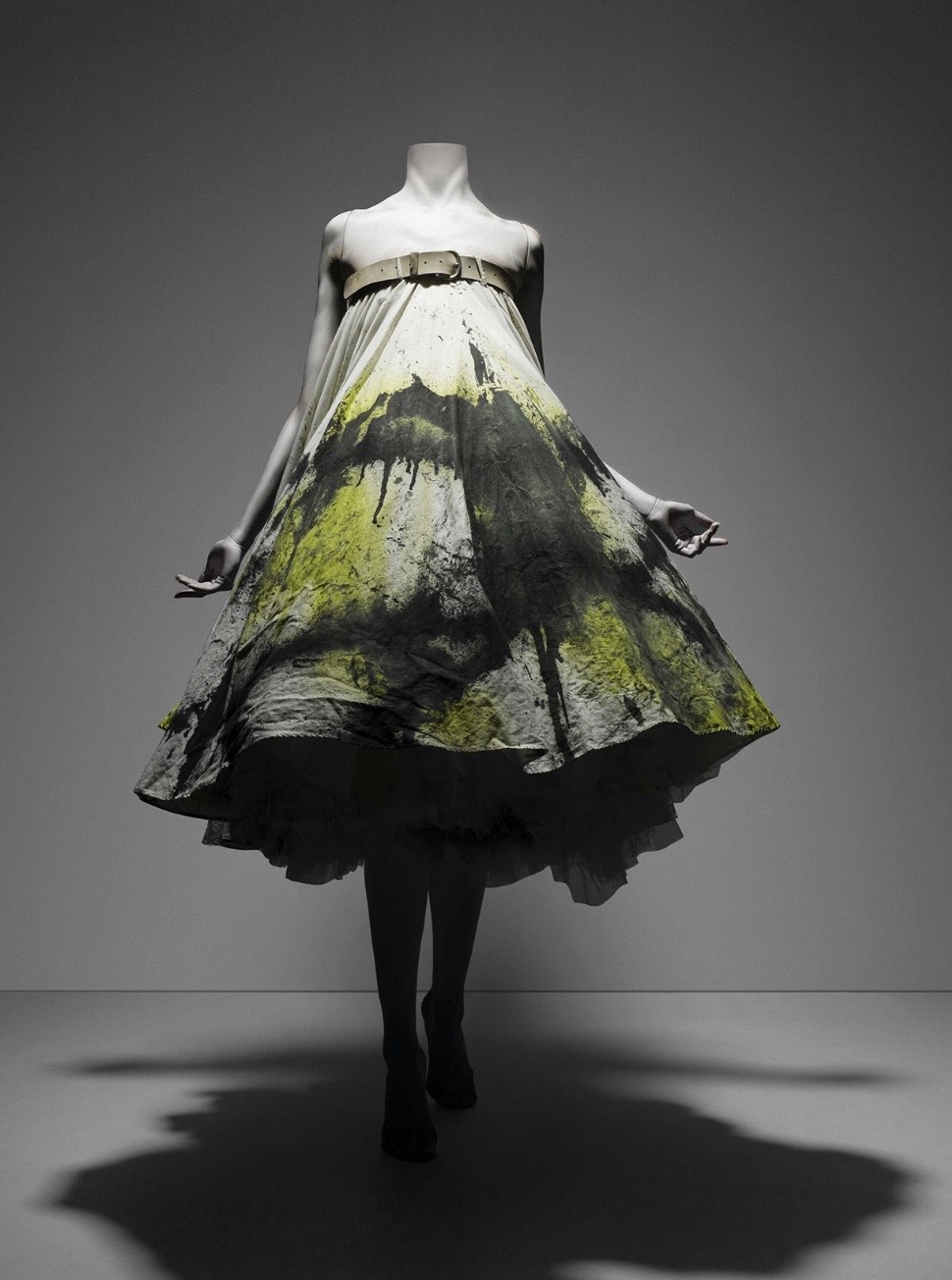
At the conclusion of the show, model Shalom Harlow stood on a rotating platform wearing a white dress.
As the platform began to turn, two industrial robotic arms moved toward her, spraying black and yellow paint across the garment.
The audience witnessed the dress being transformed in real time.
What began as a pristine white silhouette became an abstract composition created through the interaction of human movement, mechanical precision, and apparent unpredictability.
The performance blurred the boundaries between fashion presentation, installation art, choreography, and technological experimentation.
The dress was no longer simply the finished product of a designer's imagination.
Its transformation became part of the artwork itself.
More than two decades later, the performance remains remarkably contemporary.
At a moment when artificial intelligence, digital creation, robotics, and new production technologies are reshaping creative industries, McQueen's experiment feels less like a historical curiosity and more like an early expression of questions that continue to define the future of fashion.
Can technology become a creative collaborator?
Can a garment exist as both an object and an experience?
Can the act of creation become as significant as the finished design?
McQueen did not offer simple answers.
He demonstrated that fashion could become a space in which such questions were explored.
VI. The Freedom to Create
What Fashion History Leaves Behind
Looking across these extraordinary creations, one might initially struggle to identify a common aesthetic.
Schiaparelli's surrealist experiments bear little visual resemblance to Saint Laurent's geometric precision.
Versace's exuberance stands in striking contrast to Kawakubo's unconventional silhouettes.
Mugler's futuristic fantasies and McQueen's emotionally charged performances occupy entirely different creative territories.
Yet together, they reveal a shared principle.
The most influential designers did not simply respond to what fashion was. They imagined what it could become.
Their contributions extended beyond individual garments or recognizable signatures.
Schiaparelli expanded the relationship between fashion and artistic imagination.
Saint Laurent demonstrated the possibilities of translating one creative discipline into another.
Versace embraced the cultural power of image, individuality, and excess.
Mugler reimagined the body through sculptural construction.
Kawakubo challenged the conventions through which beauty is defined.
McQueen transformed fashion presentation into an artistic event.
Each contributed to a broader creative freedom inherited by subsequent generations.
Today, that inheritance exists in a world undergoing another profound transformation.
Digital technologies are changing how garments are imagined and visualized. Artificial intelligence is introducing new creative processes. Virtual environments challenge the necessity of physical materials, while contemporary designers increasingly move between fashion, architecture, cinema, photography, and performance.
The boundaries separating creative disciplines are once again being reconsidered.
But the underlying question remains remarkably familiar.
What can fashion become when imagination is allowed to move beyond convention?
VII. Beyond the Archive
An ISALOR Perspective
At ISALOR, fashion is approached as part of a larger creative universe, one in which design exists in dialogue with art, architecture, music, technology, and storytelling.
The history explored in this issue is not a catalogue of aesthetics to reproduce, nor a collection of references that must be traced to individual garments.
It is a reminder that fashion's evolution has always depended on the freedom to explore beyond established boundaries.
The archive offers more than inspiration. It offers perspective.
It reveals that creative independence does not require rejecting history, but understanding the possibilities that history has opened.
The most meaningful inheritance left by fashion's great visionaries is not a particular silhouette, technique, or decorative language.
It is permission to question, experiment, and imagine.
And perhaps that is what makes their work timeless.
Not that their creations remain unchanged in our collective memory, but that the questions they raised continue to inspire new answers.
Fashion does not move forward by repeating the extraordinary. It moves forward by daring to imagine what comes next.
THE MARGIN is an independent editorial journal by ISALOR, exploring the intersections of fashion, art, design, and contemporary culture.
Historical garments and collections discussed in this article are the creations of their respective designers and fashion houses. ISALOR's reflections represent an independent editorial perspective and do not imply affiliation or endorsement.