There are fashion shows we remember for the clothes. And then there are fashion shows we remember because, for a few extraordinary minutes, fashion became something much larger than itself.
I. Beyond the Runway
For decades, the fashion show existed primarily as a presentation of clothes.
Designers introduced their collections to buyers, editors, and a relatively small circle of industry professionals. The runway was a commercial space, designed to communicate the direction of a fashion house and ultimately sell its creations.
But fashion has never existed independently of popular culture.
It has borrowed from music, cinema, art, architecture, technology, and the changing personalities of each generation. Eventually, these influences began to transform not only the clothes being presented but the presentations themselves.
The runway became a stage.
Models became celebrities. Designers became cultural figures. Fashion shows became performances, installations, and increasingly sophisticated media events.
Certain moments traveled far beyond the audience seated beside the catwalk. They entered music television, newspapers, the internet, and eventually the collective visual memory of entire generations.
Their cultural influence was no longer measured exclusively by what appeared in stores the following season.
It was measured by how many people remembered what happened.
Five extraordinary runway moments illustrate this transformation.
II. VERSACE, 1991
When the Supermodels Became the Show
Versace — Fall/Winter 1991 · Milan, March 7, 1991
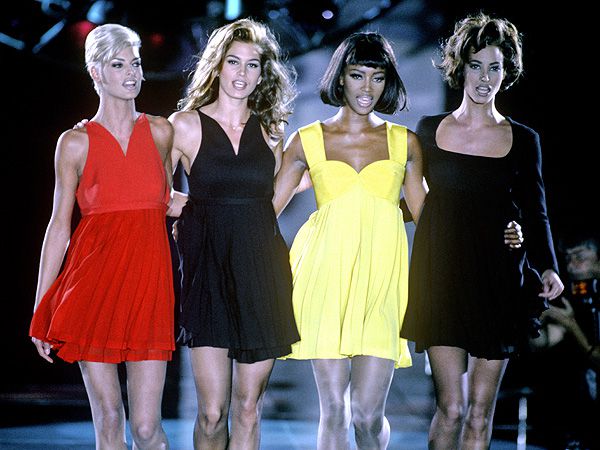
In March 1991, Gianni Versace orchestrated a moment that would become one of the defining images of the supermodel era.
Four women appeared together on the runway: Naomi Campbell, Linda Evangelista, Cindy Crawford, and Christy Turlington.
Walking arm in arm, they mouthed the lyrics to George Michael's Freedom! '90, the same song whose music video had already brought their faces to a global audience.
The connection was deliberate.
Directed by David Fincher, the music video had transformed the supermodels into performers, blurring the distinction between fashion imagery and mainstream entertainment.
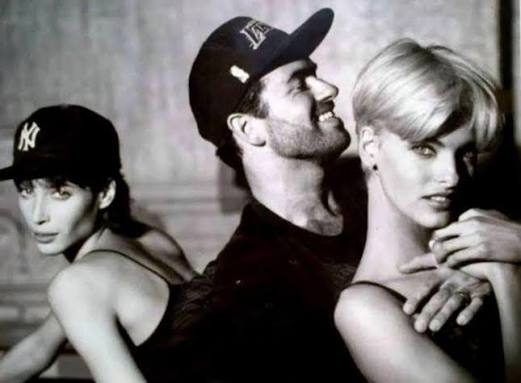
Versace brought that cultural phenomenon back to the runway.
The audience was no longer watching four models simply presenting garments. They were witnessing four internationally recognizable personalities performing their own celebrity.
The clothes remained important, but the moment belonged to the women wearing them.
The finale captured an extraordinary shift in the fashion industry.
Supermodels had become cultural icons whose identities could generate publicity, commercial value, and public fascination independently of the collections they represented.
Their presence could transform a runway show into an event.
Versace understood the power of that transformation.
By connecting music, celebrity, sexuality, and fashion in a single unforgettable image, he helped establish a new language for luxury fashion.
The runway was no longer exclusively about what people wanted to wear.
It was also about whom they wanted to watch.
The Cultural Impact
The Versace finale remains a defining symbol of the 1990s supermodel phenomenon and an early example of a fashion show designed to resonate beyond the fashion industry.
It demonstrated that personalities, music, and a carefully constructed moment could become as culturally influential as the collection itself.
III. ALEXANDER McQUEEN, 1998
When the Dress Became a Performance
Alexander McQueen — No. 13, Spring/Summer 1999 · London, September 27, 1998
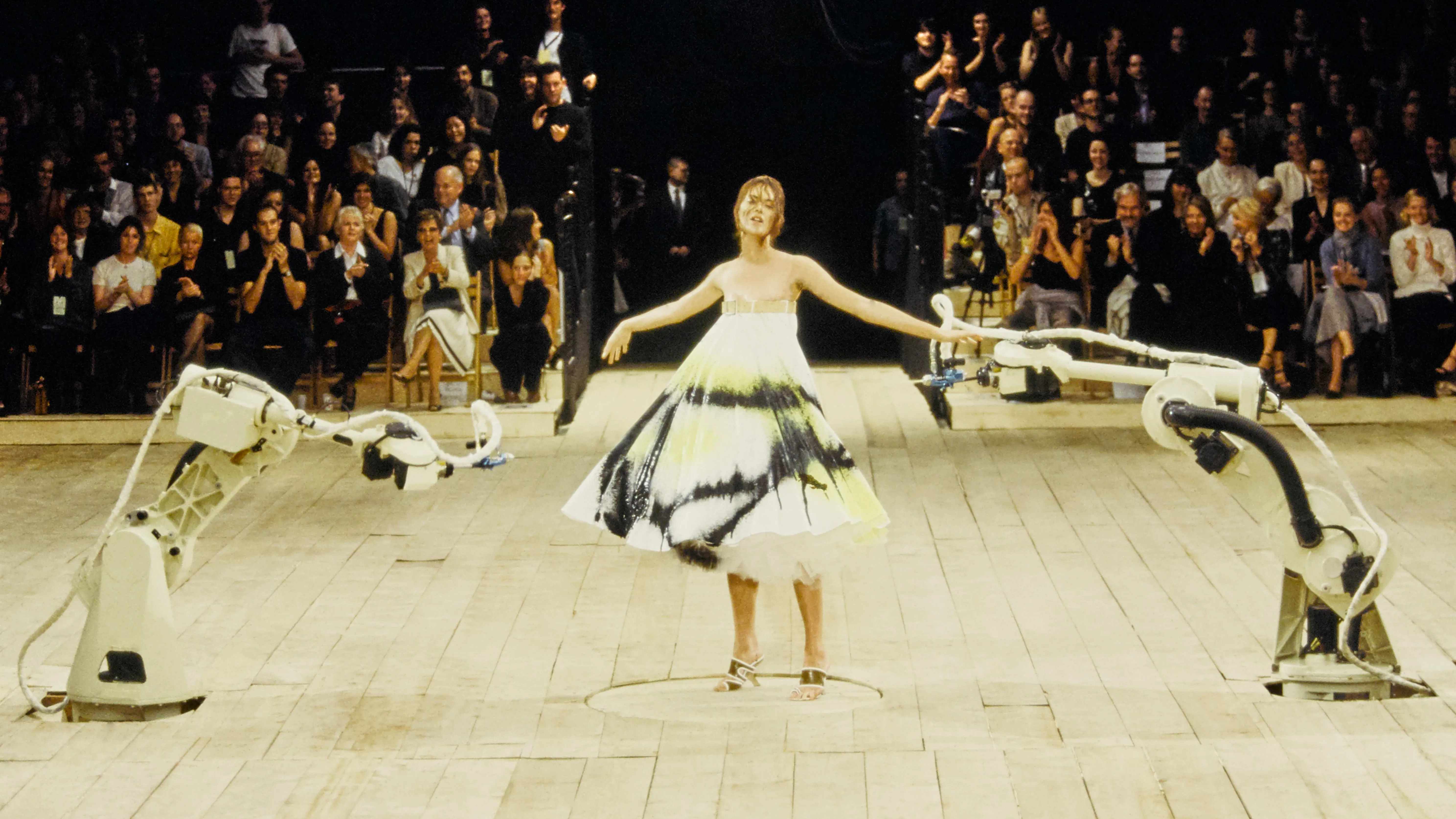
At the conclusion of Alexander McQueen's Spring/Summer 1999 presentation, a model stepped onto a circular platform wearing a simple white dress.
Her name was Shalom Harlow.
As the platform began to rotate, two industrial robotic arms moved toward her.
The machines appeared to examine the figure standing between them before suddenly releasing streams of black and yellow paint across the fabric.
What followed was an extraordinary encounter between technology, movement, and the human body.
The white dress became a canvas.
Harlow responded to the machines through a series of expressive movements, appearing at times to surrender to their mechanical choreography.
The performance transformed a conventional runway finale into something closer to experimental theater.
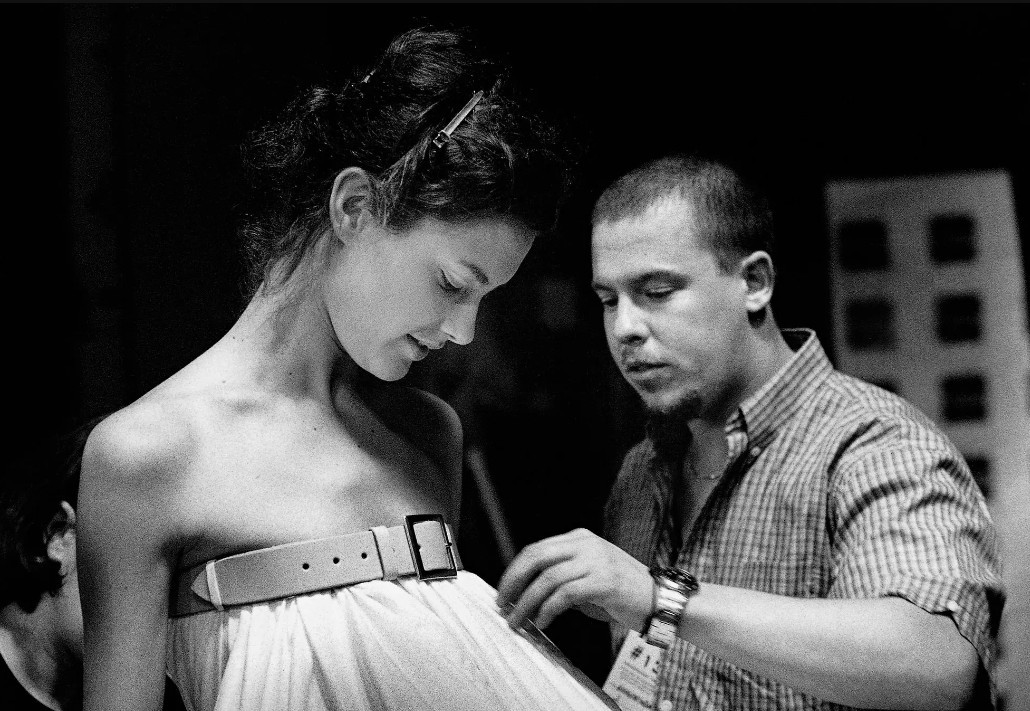
McQueen's inspiration included the work of artist Rebecca Horn, whose explorations of machines, movement, and the body informed the concept.
The result was both beautiful and unsettling.
The machines were creating an artwork, but they were also imposing their movements upon the person wearing it.
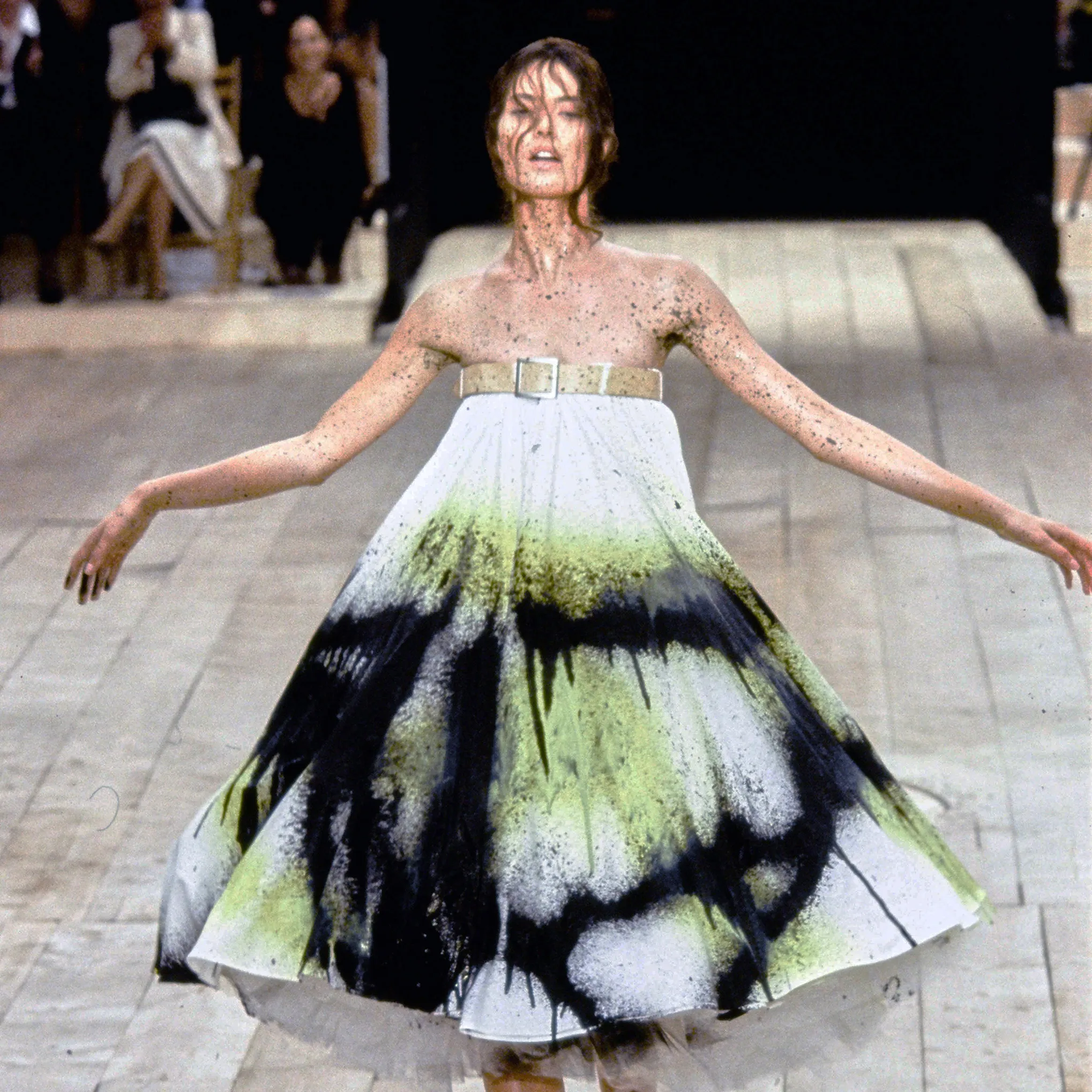
The relationship between designer, model, garment, and technology became the subject of the performance itself.
McQueen understood something fundamental about the future of fashion presentation: an audience could be moved not only by the final object but by witnessing the process of its creation.
The dress was no longer simply revealed.
It was made before their eyes.
The Cultural Impact
The finale of No. 13 became one of the most celebrated performances in fashion history.
It expanded the possibilities of the runway, demonstrating how technology, choreography, and conceptual art could become essential elements of fashion storytelling.
Long before short-form digital video made spectacular fashion moments instantly shareable, McQueen had created an image that seemed destined to be watched repeatedly.
IV. CHANEL, 2014
When Luxury Went Grocery Shopping
Chanel — Fall/Winter 2014 · Paris, March 4, 2014
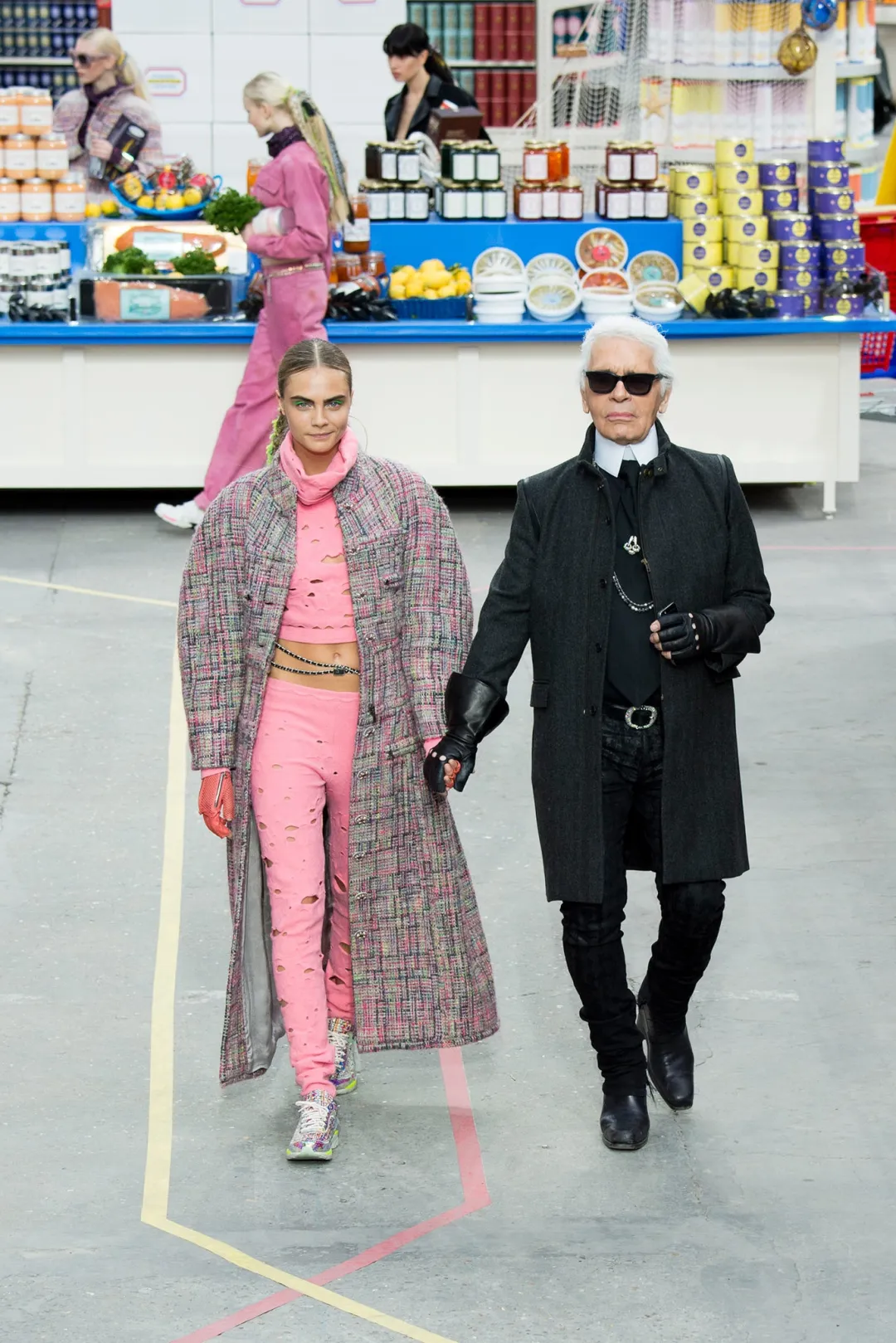
In March 2014, Karl Lagerfeld transformed the Grand Palais in Paris into something almost impossible to imagine as the setting for a luxury fashion show.
A supermarket.
Not an abstract interpretation of a supermarket, but an elaborate retail environment complete with aisles, shelves, shopping baskets, and thousands of products.
Everywhere, the ordinary language of consumer culture had been reimagined through Chanel.
The packaging carried playful references to the fashion house. Everyday products became branded objects. Familiar supermarket displays were transformed into an elaborate exercise in luxury identity.
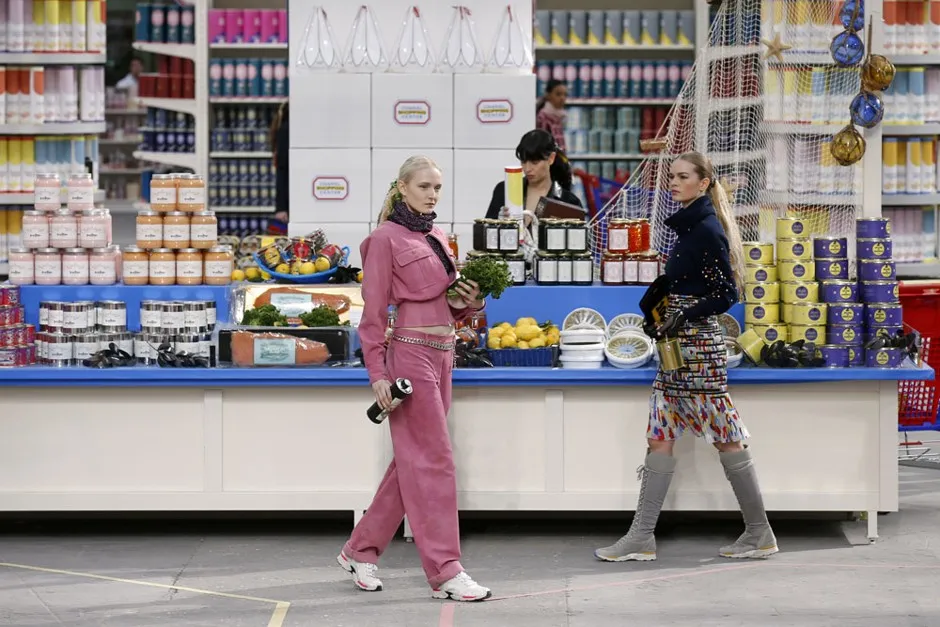
Models walked between the aisles wearing tweed suits, colorful knitwear, sneakers, and accessories, as though shopping had suddenly become the most fashionable activity in Paris.
The contrast was deliberate.
Chanel, a house historically associated with exclusivity and refinement, had placed its collection inside one of the most ordinary environments of contemporary life.
The spectacle was humorous, but it also raised an interesting question.
What happens when luxury becomes a brand capable of transforming virtually anything into an object of desire?
A supermarket product has value because of its practical purpose.
A luxury object often acquires additional value through its identity, symbolism, and cultural associations.
Lagerfeld placed these two systems beside one another.
The result was simultaneously a fashion show, an immersive installation, and a commentary on consumer culture.
It was also an exceptionally effective media image.
Photographs of Chanel models carrying shopping baskets and moving between grocery shelves communicated the entire concept almost instantly.
Even someone with little knowledge of fashion could understand the visual joke.
The Cultural Impact
The Chanel supermarket became one of the most recognizable runway environments of the decade.
It demonstrated the commercial power of creating an entire world around a collection.
The location was no longer simply a background for the clothes.
It was part of the message, part of the entertainment, and part of the brand itself.
Lagerfeld transformed the everyday into spectacle, revealing how contemporary luxury could operate simultaneously as fashion, advertising, and popular culture.
V. VERSACE, 2019
The Dress That Returned to Break the Internet
Versace — Spring/Summer 2020 · Milan, September 20, 2019
In February 2000, Jennifer Lopez arrived at the Grammy Awards wearing a green jungle-print Versace dress.
The plunging silk chiffon design immediately became one of the most discussed celebrity fashion moments of its era.
Its influence extended far beyond the red carpet.
At a time when internet search engines primarily delivered lists of text links, enormous numbers of people wanted to find photographs of Lopez wearing the dress.
That demand helped inspire the development of Google Images.
Nearly twenty years later, Donatella Versace decided to revisit the moment.
During the Spring/Summer 2020 presentation in Milan, the original jungle print returned as a central theme of the collection.
The runway incorporated digital projections and a collaboration with Google, connecting the history of the dress with the technology its popularity had helped inspire.
Then came the finale.
Following a voice command asking Google to reveal the real jungle dress, Jennifer Lopez appeared on the runway wearing a new interpretation of the legendary design.
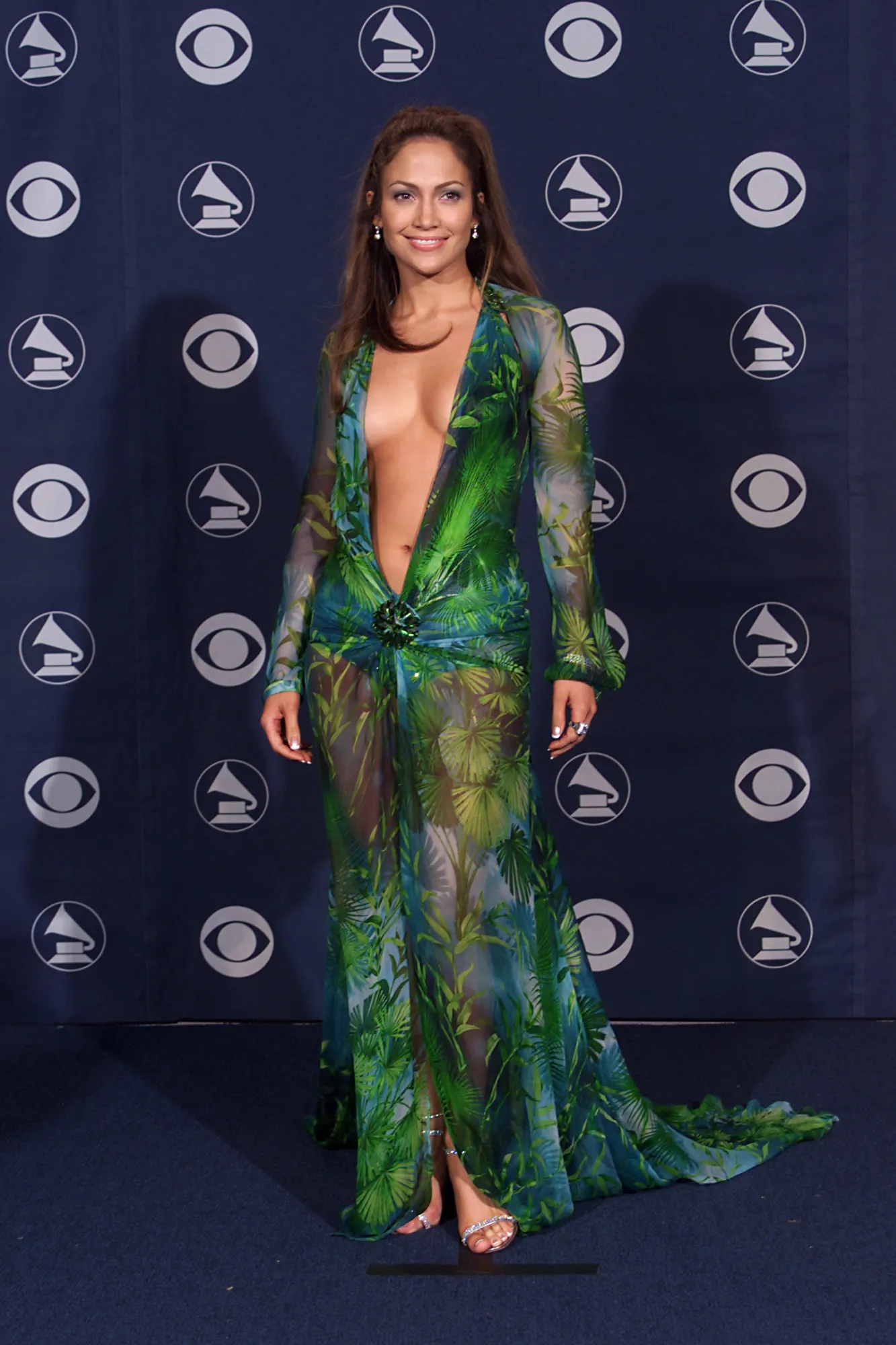
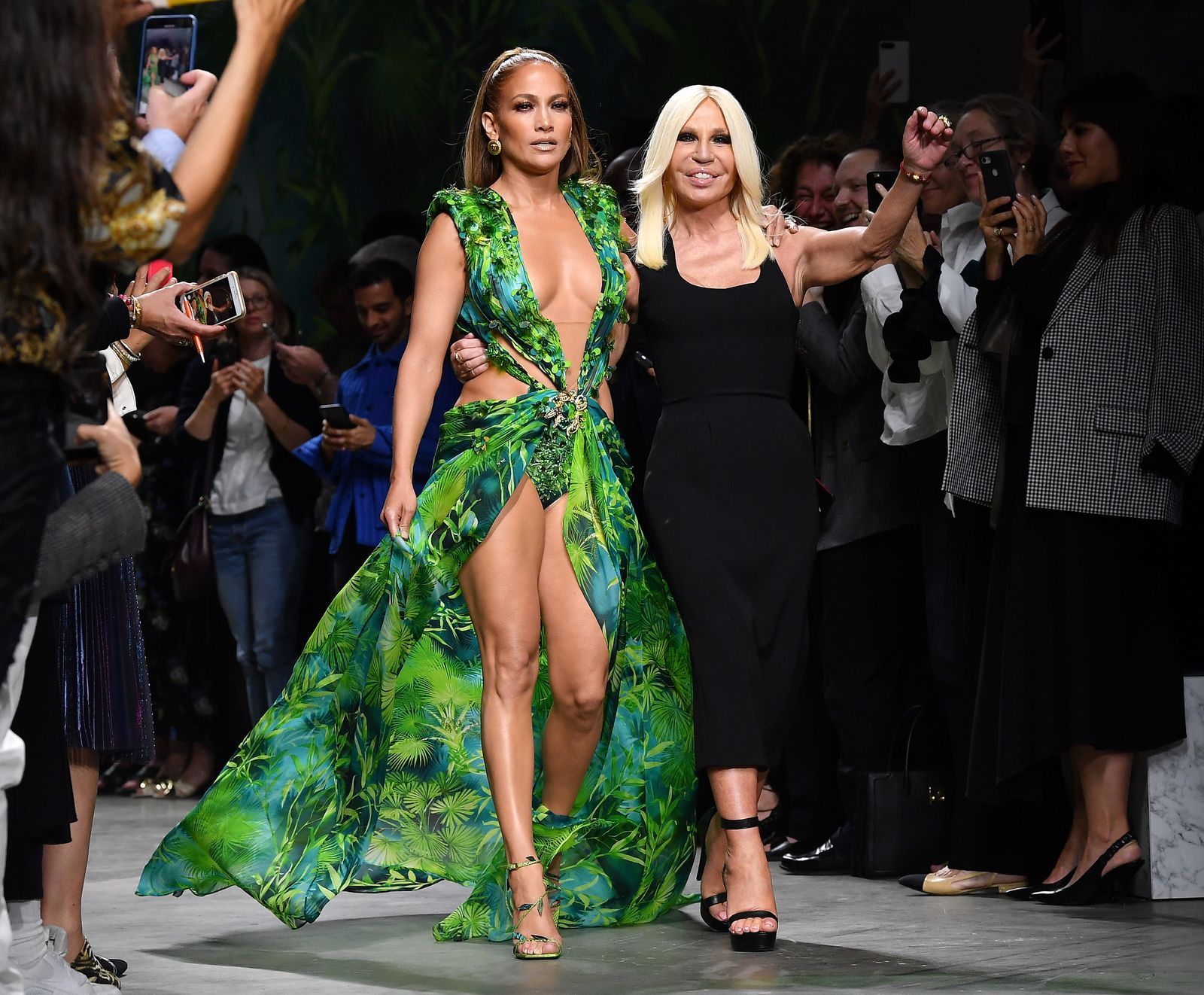
The audience erupted.
Phones rose into the air.
The moment immediately began circulating across digital platforms, recreating the extraordinary public attention that had surrounded the original dress almost two decades earlier.
But this time, the spectacle was consciously constructed around that history.
Donatella Versace had transformed a memory into a new cultural event.
The dress was no longer simply a garment.
It had become a symbol of the relationship between fashion, celebrity, technology, and the internet.
The Cultural Impact
The 2019 Versace finale demonstrated the extraordinary commercial value of fashion's own history.
A recognizable garment, a globally famous personality, and a carefully orchestrated surprise became the foundation of a new media phenomenon.
It also revealed how fashion houses could transform nostalgia into contemporary relevance.
The original moment had helped change how people searched for images.
Its return was designed for a world in which images could travel everywhere within seconds.
VI. COPERNI, 2022
When Fashion Was Created in Real Time
Coperni — Spring/Summer 2023 · Paris, September 30, 2022
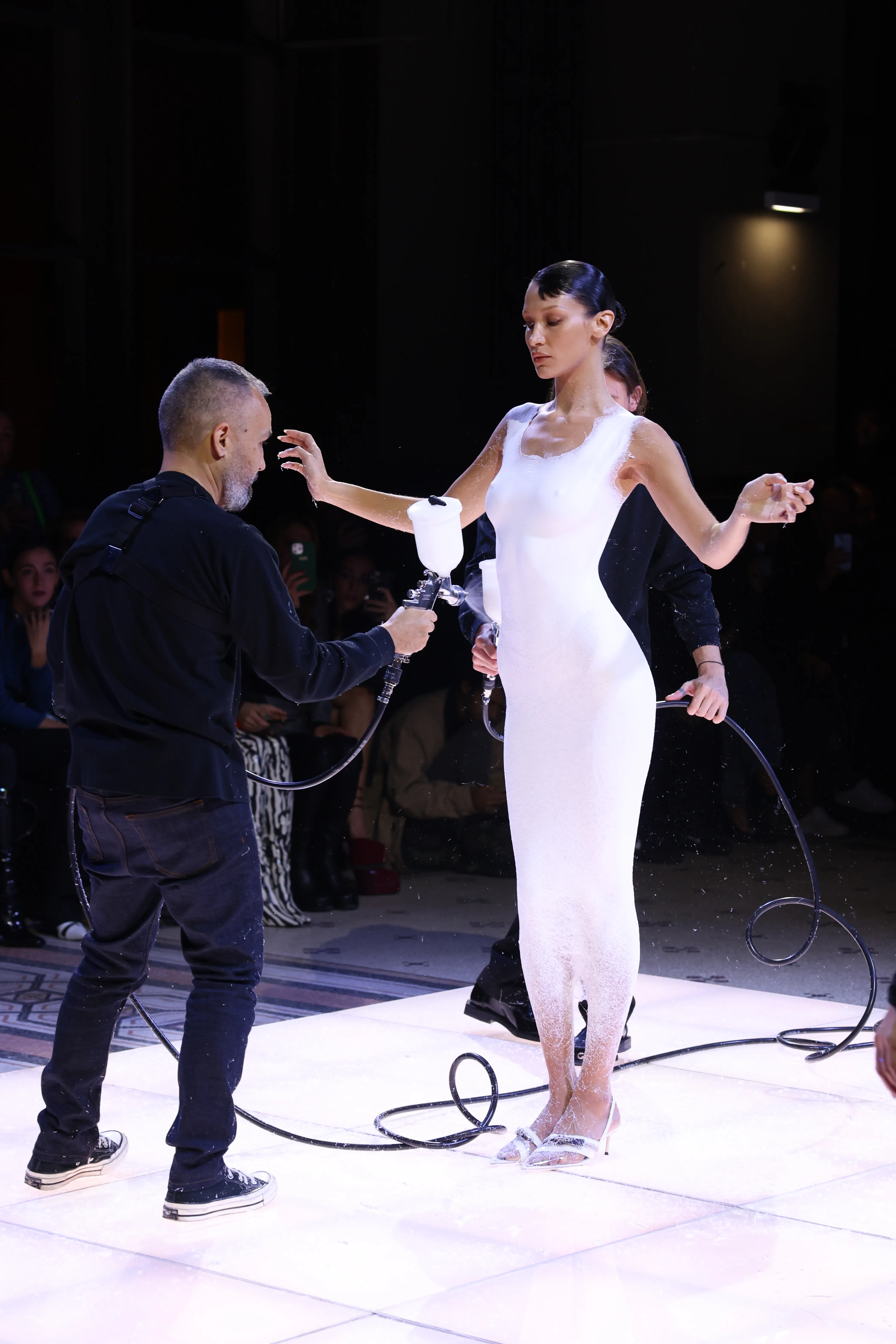
In September 2022, Bella Hadid appeared before an audience in Paris wearing minimal, skin-toned undergarments.
She stood almost motionless as a team of specialists approached her with spray devices.
Instead of presenting a finished garment, they began creating one directly on her body.
A white material gradually covered her torso and extended downward, forming the shape of a dress.
The process was made possible by Fabrican, a spray-on textile technology developed by Dr. Manel Torres.
As the material settled into a wearable fabric, the garment was adjusted and refined before Hadid walked the runway.
The entire transformation unfolded in front of the audience.
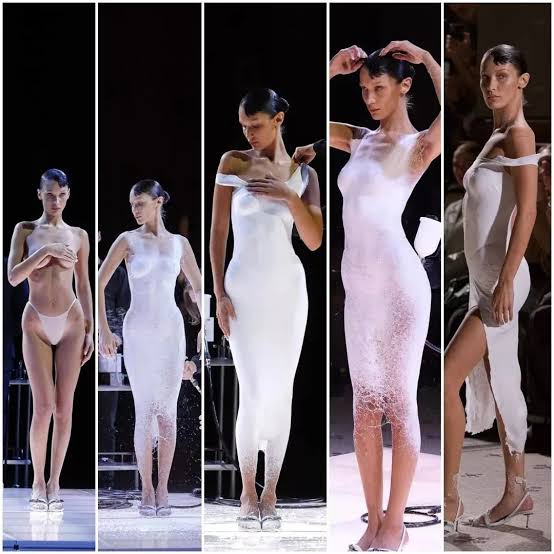
The designers behind Coperni, Sébastien Meyer and Arnaud Vaillant, had created a finale that combined scientific innovation with the visual language of fashion performance.
The concept was technically ambitious, but its cultural power came from its simplicity.
Anyone watching could understand what was happening.
A dress was being created from seemingly nothing.
The spectacle required no explanation, no elaborate narrative, and no previous knowledge of the collection.
Its transformation was the story.
Within the visual culture of social media, that clarity became enormously powerful.
The event was immediately suited to short videos, repeated viewing, and global circulation.
There was also a fascinating historical connection.
More than two decades earlier, Alexander McQueen had used industrial machines to transform a dress worn by Shalom Harlow.
Coperni offered a different interpretation of the relationship between technology and fashion.
McQueen's machines altered an existing garment.
Coperni's technology produced the garment itself.
Both moments made the creative process visible, but they belonged to different cultural eras.
The Cultural Impact
Coperni's spray-on dress became one of the defining runway images of the early 2020s.
It demonstrated how innovation could become a powerful communication strategy when presented through an instantly recognizable visual event.
The finale was simultaneously a fashion presentation, a technological demonstration, and a piece of viral entertainment.
In the age of social media, the creation of the garment had become as important as the garment itself.
VII. The Moment Is the Message
Looking at these five events together reveals an extraordinary evolution in the relationship between fashion and popular culture.
In 1991, Versace understood the power of celebrity.
In 1998, Alexander McQueen transformed the runway into performance art.
In 2014, Karl Lagerfeld used the language of consumer culture to construct an entire Chanel universe.
In 2019, Donatella Versace demonstrated how an iconic fashion image could be revived through nostalgia and digital technology.
And in 2022, Coperni showed how the process of making fashion could become a global spectacle.
Each moment reflects the media environment of its time.
The supermodel era belonged to magazines and music television.
McQueen's theatrical experiments anticipated the growing importance of fashion film and recorded performance.
Chanel's supermarket became an instantly recognizable image in an increasingly digital visual culture.
Versace's jungle dress connected the origins of image search with the age of social media.
Coperni's spray-on dress seemed conceived for a world in which millions of people experience fashion through a screen.
Yet despite their differences, these moments share something essential.
They created an experience that could be understood, remembered, and retold.
The fashion show became more than a sequence of garments.
It became a cultural statement.
For fashion houses, these moments also reveal an important commercial truth: visibility alone is not the same as cultural relevance.
A spectacular presentation may attract attention for a day.
A meaningful image can remain associated with a brand for decades.
The most successful runway moments create something that survives long after the collection has disappeared from stores.
They become part of the history of the house.
Part of the history of fashion.
And sometimes, part of popular culture itself.
VIII. What Remains After the Show
Fashion is often described as temporary.
Collections change. Seasons disappear. Trends are replaced by new trends.
But certain images resist that cycle.
Four supermodels walking together to a pop anthem.
A white dress attacked by machines.
A luxury supermarket filled with Chanel products.
Jennifer Lopez returning in the dress that helped change the internet.
Bella Hadid standing still as a garment materializes around her.
These are images that remain recognizable long after their original presentations.
Perhaps that is the real achievement of the most memorable fashion shows.
They do not simply introduce what comes next.
They create something that people continue to look back at.
Because sometimes the most important thing on the runway is not the fashion being shown, but the moment being created.
References & Further Reading
- Vogue — Versace Fall 1991
- Victoria and Albert Museum — Alexander McQueen, No. 13
- The Metropolitan Museum of Art — Alexander McQueen, No. 13
- Vogue — Chanel Fall 2014
- Vogue — Versace Spring 2020
- Google — The Versace Jungle Dress and Google Images
- Vogue — Coperni Spring 2023
THE MARGIN — An Editorial Journal by ISALOR
Fashion. Art. Culture. Perspective.